

Healthcare professionals translation: 24/7 Vital Safety
Why Healthcare Professionals Translation Matters for Patient Safety
Healthcare professionals translation is the critical process of converting medical information from one language to another, ensuring accuracy, cultural sensitivity, and HIPAA compliance. For providers serving diverse populations, it’s not just a communication tool; it’s a patient safety imperative.
Quick Answer: What Healthcare Professionals Need to Know
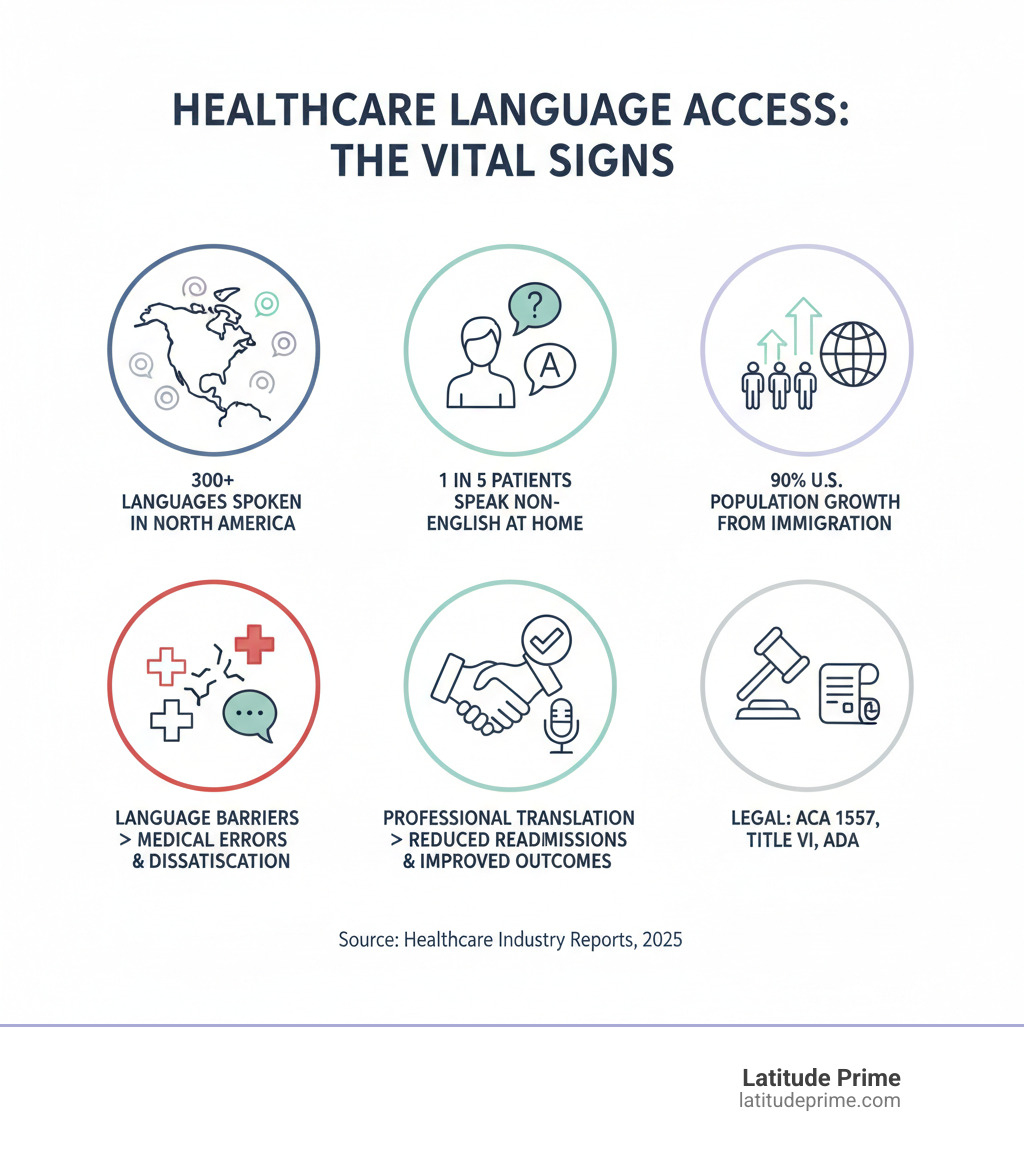
- The Challenge: Over 300 languages are spoken in North America, and 1 in 5 patients speaks a language other than English at home.
- The Risk: Language barriers contribute to medical errors, poor treatment adherence, and patient dissatisfaction.
- The Solution: Professional, HIPAA-compliant translation and interpretation services with certified medical linguists and 24/7 access.
- The Requirement: Federal mandates (ACA Section 1557, Title VI, ADA) require healthcare providers to offer language access services.
- The Outcome: Proper translation improves patient safety, reduces readmissions, and builds trust.
With nearly 90% of U.S. population growth expected from immigration, the need for language services is accelerating. The U.S. is also home to over 10 million citizens who are Deaf or Hard of Hearing and 5 million who are blind or visually impaired.
The stakes are high. A patient receiving discharge instructions in their native language is more likely to follow them, reducing readmissions. An accurate medical interpreter can be “the difference between life and death.”
Research shows that qualified interpreters are a long-term cost-benefit, yet many providers still rely on informal methods like bilingual staff or family members, creating serious risks for accuracy, confidentiality, and liability. This guide will show you how to implement professional translation services that meet regulatory standards and protect patient safety.
The Core Pillars: Ensuring Accuracy and Compliance in Translation
In healthcare professionals translation, accuracy and compliance are non-negotiable. A single mistranslated word on a medication label or consent form can have devastating consequences. At Latitude Prime, our services are built on three pillars to ensure safe, inclusive, and compliant care for every patient.

Prioritizing Ironclad HIPAA Compliance
HIPAA compliance is a promise to your patients that their protected health information (PHI) stays private. When working with a language service, every interpreted conversation and translated document involves PHI. An unsecured service can expose sensitive data, leading to serious legal and financial penalties.
Patient data safety is our primary concern. We use secure platforms with robust confidentiality protocols that meet the strictest regulatory standards. Our services are built with HIPAA compliance at their core, featuring encrypted communications for remote sessions, secure file transfers for documents, and comprehensive confidentiality agreements signed by all linguists. We ensure patient information remains safeguarded at every step.
Investing in Certified Medical Document Translation
Medical language is complex. Vital documents like consent forms, discharge summaries, and treatment plans require more than bilingual fluency; they demand professional expertise. Running these materials through a free online translator is dangerous and irresponsible.
Our certified medical translators are experts in medical terminology and cultural nuances. We hold ourselves to the highest standards through ISO 17100 certification, which guarantees every translation meets rigorous quality benchmarks for accuracy and on-time delivery. We also focus on health literacy, adapting patient materials to a fourth-to-sixth grade reading level to ensure comprehension, not just translation.
The IMIA Guide on Medical Translation states that machine translation is “particularly dangerous” in medicine. Professional medical translation, involving human experts and quality assurance, is essential for protecting your patients and your organization.
Navigating Legal and Regulatory Mandates
Providing language access in healthcare is not optional—it’s the law. Several federal mandates require it for any organization receiving federal funding, which includes most healthcare providers.
- ACA Section 1557 prohibits discrimination based on national origin, requiring language access for individuals with Limited English Proficiency (LEP).
- Title VI of the Civil Rights Act mandates that programs receiving federal funds must ensure LEP individuals can meaningfully access services.
- The Americans with Disabilities Act (ADA) requires effective communication for individuals with disabilities, including providing qualified sign language interpreters for Deaf or Hard of Hearing patients.
As the National Health Law Program’s guide notes, language access is an ethical, financial, and legal imperative. Non-compliance can result in fines, lawsuits, and loss of federal funding. Partnering with a professional language services provider who understands these regulations makes compliance straightforward, fostering an environment of equitable care.
The Human Element: Why Professional Interpreters are Non-Negotiable
While technology offers powerful tools for healthcare professionals translation, the nuanced understanding of a trained human interpreter is irreplaceable, especially in live patient interactions. Clear communication saves lives, and that level of clarity requires a professional.

The Dangers of Using Untrained Interpreters
In a busy clinic, it’s tempting to use a bilingual staff member or a patient’s family member to interpret. However, this common shortcut carries risks that far outweigh any perceived convenience. Being bilingual is not the same as being a qualified medical interpreter.
Untrained interpreters, including family, often lack the specialized medical vocabulary to convey information accurately. This can lead to critical errors in diagnosis, treatment, and medication. They are also not bound by HIPAA, creating confidentiality risks. Family members are emotionally invested and may filter or alter information, compromising the patient’s autonomy and informed consent. Using children as interpreters is particularly harmful, as it exposes them to vicarious trauma and places an unfair burden on them.
As the National Health Law Program’s guide warns, even automated systems like Google Translate should be avoided due to quality concerns. Using any untrained interpreter increases your organization’s liability for medical errors and adverse outcomes.
The Value of a Medically-Qualified Professional
Professional medical interpreters are trained specialists who master the art and science of healthcare communication. Their value is multifaceted:
- Medical Terminology Expertise: They undergo rigorous training to ensure every complex term is conveyed accurately.
- Cultural Awareness: They act as cultural brokers, helping bridge cultural gaps that can influence health decisions.
- Ethical Standards: They adhere to strict codes of ethics mandating impartiality, confidentiality, and accuracy. They are a neutral conduit for information and are bound by HIPAA.
This professionalism builds patient trust, which leads to better rapport, increased treatment adherence, and more positive health outcomes. Whether on-site, via Video Remote Interpreting for Healthcare, or over the phone, professional interpreters are the crucial link to safe and equitable care.
| Feature | Professional Interpreters | Family/Bilingual Staff (Untrained) |
|---|---|---|
| Accuracy | High; trained in medical terminology, ethical codes, and interpreting techniques. | Variable; often lacks medical vocabulary, prone to errors and omissions. |
| Impartiality | High; maintains neutrality, acts as a conduit, clarifies cultural nuances without bias. | Low; emotionally involved, may filter or add information, compromising patient autonomy. |
| Confidentiality | High; bound by strict ethical codes (e.g., HIPAA), ensures patient privacy. | Low; not bound by professional ethics, increases risk of privacy breaches. |
| Liability | Shifts liability from healthcare provider for communication errors (when qualified). | Increases liability for healthcare provider due to potential miscommunication and errors. |
| Medical Knowledge | Extensive; specialized training in anatomy, physiology, and medical procedures/diagnoses. | Limited; conversational fluency does not equate to medical expertise. |
| Safeguarding | Helps identify and protect vulnerable patients (e.g., human trafficking, abuse). | Can inadvertently or intentionally obscure critical information, putting patients at risk. |
| Trust | Builds patient trust through professional, respectful, and accurate communication. | Can erode trust if patient feels misunderstood, disrespected, or that their privacy is compromised. |
Key Features of Effective Healthcare Professionals Translation Services
Choosing the right healthcare professionals translation provider means finding a partner who offers a comprehensive, accessible, and integrated solution. The goal is to empower clinical teams with tools that make clear communication effortless, allowing them to focus on patient care.
Comprehensive Language and Modality Coverage
With over 300 languages spoken in North America and more than 7,000 globally, a robust language service must offer both breadth and flexibility. At Latitude Prime, we provide translation and interpretation in over 300 languages, including comprehensive American Sign Language (ASL) services.
Effective services also require multiple delivery methods to fit different clinical needs:
- On-site Interpreting: The gold standard for sensitive or complex consultations where personal presence builds trust. Our linguists serve major metropolitan areas like Minneapolis, Washington D.C., San Diego, and Miami.
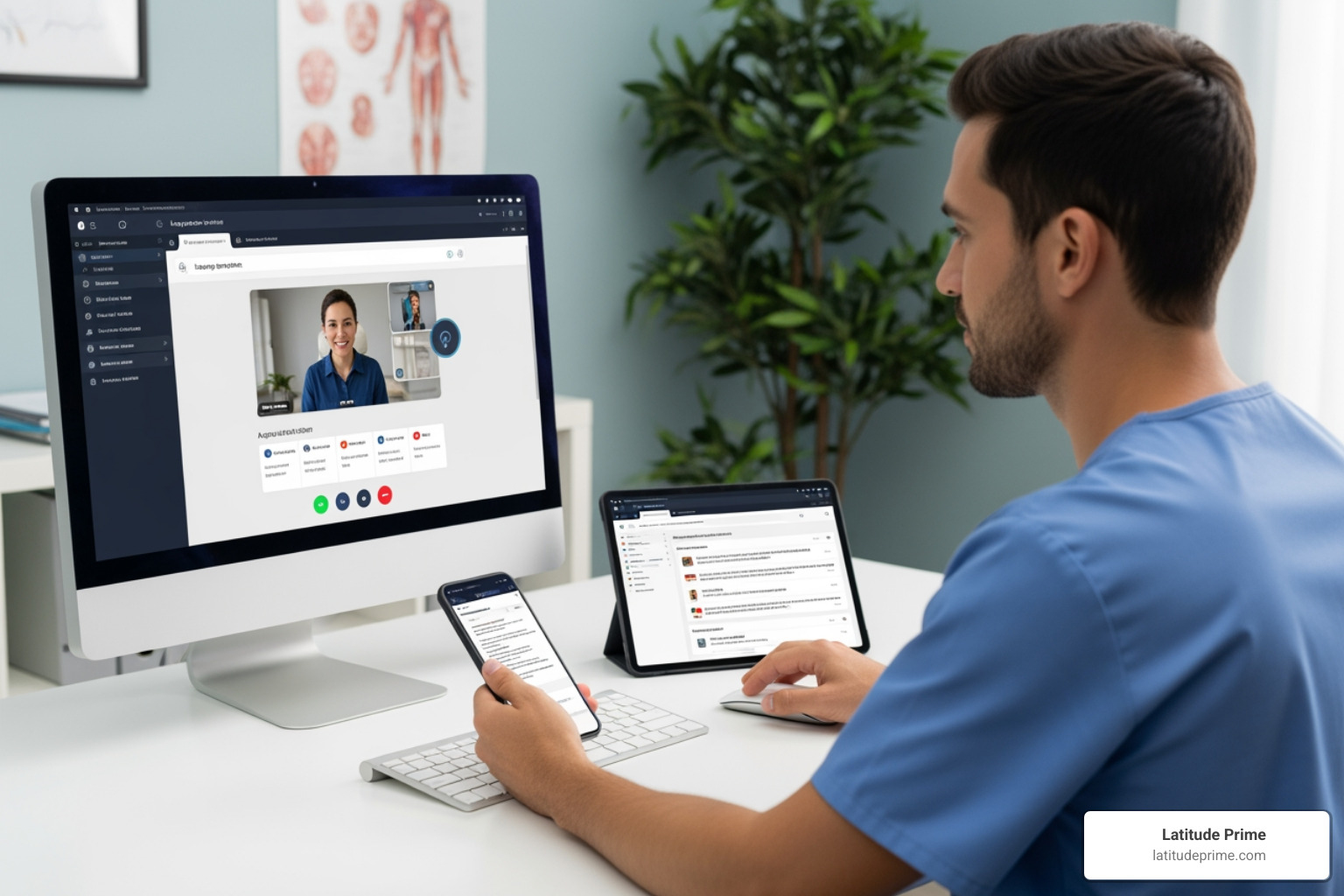
- Video Remote Interpreting (VRI): Provides on-demand visual communication in minutes, crucial for understanding body language, demonstrating procedures, or accessing less common languages and ASL remotely.
- Over-the-Phone Interpreting (OPI): Offers immediate connection for quick calls, scheduling, or urgent triage situations, with interpreters available in seconds.
This flexibility ensures every patient receives clear communication in their preferred language and format.
24/7 On-Demand Access for Critical Care
Healthcare operates 24/7, and language barriers don’t keep business hours. A patient arriving at 2 AM deserves the same quality of communication as one arriving at 2 PM. That’s why 24/7 on-demand access to professional interpreters is a clinical necessity.
In emergency and urgent care settings, every second counts. Immediate access to an interpreter enables rapid assessment and treatment, which can be life-saving. For the growing field of telehealth, integrated language services are essential for true accessibility. Our Video Medical Interpreter services ensure patients can connect with providers from anywhere, at any time, in their own language. This constant availability for after-hours support reduces stress for patients and providers, prevents complications, and ensures consistent, high-quality care around the clock.
Seamless Integration for Efficient Workflows
Language services are only effective if they are easy to use. Healthcare professionals need tools that fit into their demanding schedules, not add to them. We design our services to integrate seamlessly into existing clinical workflows.
User-friendly platforms make scheduling an on-site interpreter or connecting with a VRI interpreter intuitive and fast. The ultimate goal is EHR integration, which allows providers to request interpreters, capture encounter data, and process billing without leaving the patient’s record. This dramatically reduces the administrative burden on staff, freeing up nurses and schedulers to focus on patient care. For facilities searching for Medical Interpreter Agencies Near Me in our service areas, we combine local presence with this technological sophistication. Our goal is to make language access an invisible, indispensable part of daily operations.
Improving Outcomes: The Tangible Benefits of Quality Translation
Investing in professional healthcare professionals translation is a strategic choice that directly improves patient outcomes, improves satisfaction, and lifts the quality of care. It ensures language is never a barrier to treatment.

How Effective Communication Improves Patient Safety
Research confirms that language barriers lead to medical errors, but the reverse is also true: effective communication through professional interpreters dramatically improves patient safety. When patients understand their care, the benefits are clear:
- Reduced Medical Errors: Professional medical linguists prevent critical misunderstandings of dosages, allergies, and diagnoses.
- Improved Treatment Adherence: Patients who comprehend their treatment plan in their own language are far more likely to follow it.
- Valid Informed Consent: True consent is only possible when a patient fully understands the risks and benefits, which requires communication in their native language.
- Lower Readmission Rates: Patients with clear discharge instructions are less likely to experience complications, reducing costly readmissions.
Enhancing the Patient Experience with Professional Healthcare Professionals Translation
Beyond clinical safety, professional language services transform the patient’s healthcare journey. When patients can communicate freely via a professional interpreter, trust builds. They feel valued, understood, and respected.
Interpreters also serve as cultural brokers, navigating nuances that influence health beliefs. This demonstration of cultural sensitivity is key to ensuring equitable care, where every person receives the same high standard of treatment regardless of the language they speak. This commitment is reflected in higher patient satisfaction scores, providing invaluable feedback for organizations dedicated to excellence.
Specialized Solutions for Life Sciences and Pharma
The need for precision extends beyond the clinic to the life sciences and pharmaceutical sectors, where accuracy is vital for scientific integrity and regulatory approval.
- Clinical Trials: Translating consent forms, protocols, and patient materials for multinational trials requires specialized expertise to ensure data validity and participant safety.
- Research and Pharma: Translating scientific papers, drug information, and patient education materials is essential for global collaboration and ensuring patients worldwide can use medications safely.
Our expertise in Biotech & Pharmaceutical Translation & Interpretation Services and Life Sciences Translation & Interpretation Services ensures your technical and scientific content is conveyed accurately and compliantly, facilitating innovation and improving global health.
Frequently Asked Questions about Healthcare Professionals Translation
Navigating language access in healthcare can be complex. Here are concise answers to the questions we hear most often from healthcare professionals.
Why can’t I just use a bilingual staff member or a patient’s family to interpret?
While convenient, using untrained individuals is risky. Being bilingual is not the same as being a qualified medical interpreter. The main problems are:
- Lack of Medical Knowledge: They often don’t know the precise medical terminology required, leading to dangerous errors.
- Lack of Impartiality: Family members are emotionally invested and may filter or change information, compromising informed consent.
- Confidentiality Breaches: They are not trained in HIPAA or bound by professional ethics, putting patient privacy at risk.
- Legal Liability: If an error by an untrained interpreter leads to a negative outcome, your organization is liable.
Professional interpreters are trained to be accurate, impartial, and confidential, protecting both the patient and the provider.
What is the difference between medical interpretation and translation?
Though often used interchangeably, these terms refer to distinct services in the context of healthcare professionals translation:
- Medical Interpretation is for spoken language in real-time. An interpreter facilitates a live conversation, whether in-person, via video (VRI), or over the phone (OPI).
- Medical Translation is for written documents. A translator converts text such as patient records, consent forms, and discharge instructions from one language to another, ensuring precision and accuracy.
Both require specialized medical expertise, but the skills are different. Professional language service providers have experts who specialize in each discipline.
Are free online translation tools like Google Translate safe for healthcare use?
No. Free online tools like Google Translate should never be used for medical communication. The [IMIA Guide on Medical Translation] warns that machine translation is “particularly dangerous” in healthcare.
There are two primary reasons:
- They are dangerously inaccurate. These tools lack the ability to understand medical context and nuance. They can produce translations that are nonsensical or dangerously wrong, leading to serious misunderstandings and adverse events.
- They are not HIPAA-compliant. Inputting patient information into a free online tool is a data security risk and a potential violation of federal privacy laws. You have no control over where that sensitive information goes.
For all critical communication, you must use professional healthcare professionals translation services that use certified human linguists and secure, compliant platforms. Our Medical & Healthcare Translation & Interpretation Services are designed to meet these exact requirements.
Conclusion
The core message is simple: healthcare professionals translation is not an administrative task—it’s a fundamental component of patient safety, legal compliance, and equitable care.
The linguistic diversity of our communities is growing, and language barriers are a direct threat to patient health. They contribute to medical errors, poor outcomes, and a breakdown of trust. Fortunately, the solution is clear.
By investing in professional translation and interpretation, you choose safety over shortcuts. Effective language services are defined by ironclad HIPAA compliance, certified medical linguists, 24/7 on-demand access, and seamless workflow integration. As we’ve seen, professional interpreters are vastly superior to untrained staff or family, and automated tools like Google Translate are dangerously inadequate for medical use.
The benefits are tangible: reduced medical errors, lower readmission rates, higher patient satisfaction, and compliance with federal mandates like ACA Section 1557 and Title VI. You avoid costly penalties while upholding your ethical duty to provide the best care to everyone.
At Latitude Prime, we are your partner in this mission. Our ISO-certified services, network of expert linguists in over 300 languages, and commitment to quality ensure nothing is lost in translation. Whether you need on-site interpreters in Minneapolis, VRI for a telehealth call, or certified translation of medical documents, we are here to help.
Quality care should speak every language. We’re here to make that a reality.
For a comprehensive solution that meets all these critical needs, explore our Medical & Healthcare Translation & Interpretation Services. Let’s bridge communication gaps together.
