

Medical Interpreter Phone Service: Best for 2025
Why Medical Interpreter Phone Services Matter for Patient Safety
Medical interpreter phone service connects healthcare providers with qualified interpreters instantly via telephone to facilitate clear communication with Limited English Proficient (LEP) patients. These on-demand services provide 24/7 access to interpreters in 240+ languages, typically connecting calls in under 20 seconds without requiring special equipment.
Quick Access Guide to Medical Interpreter Phone Services:
- What it is: Over-the-phone interpreting (OPI) – audio-only interpretation service accessible from any phone
- When to use it: Medical consultations, patient intake, telehealth visits, emergency situations
- How it works: Dial dedicated number → Enter PIN → Select language → Connect with certified medical interpreter
- Key benefits: 24/7 availability, HIPAA-compliant, cost-effective, no special equipment needed
- Average connection time: 13-20 seconds for most languages
- Typical pricing: $3.95-$4.95 per minute, pay-as-you-go or subscription models
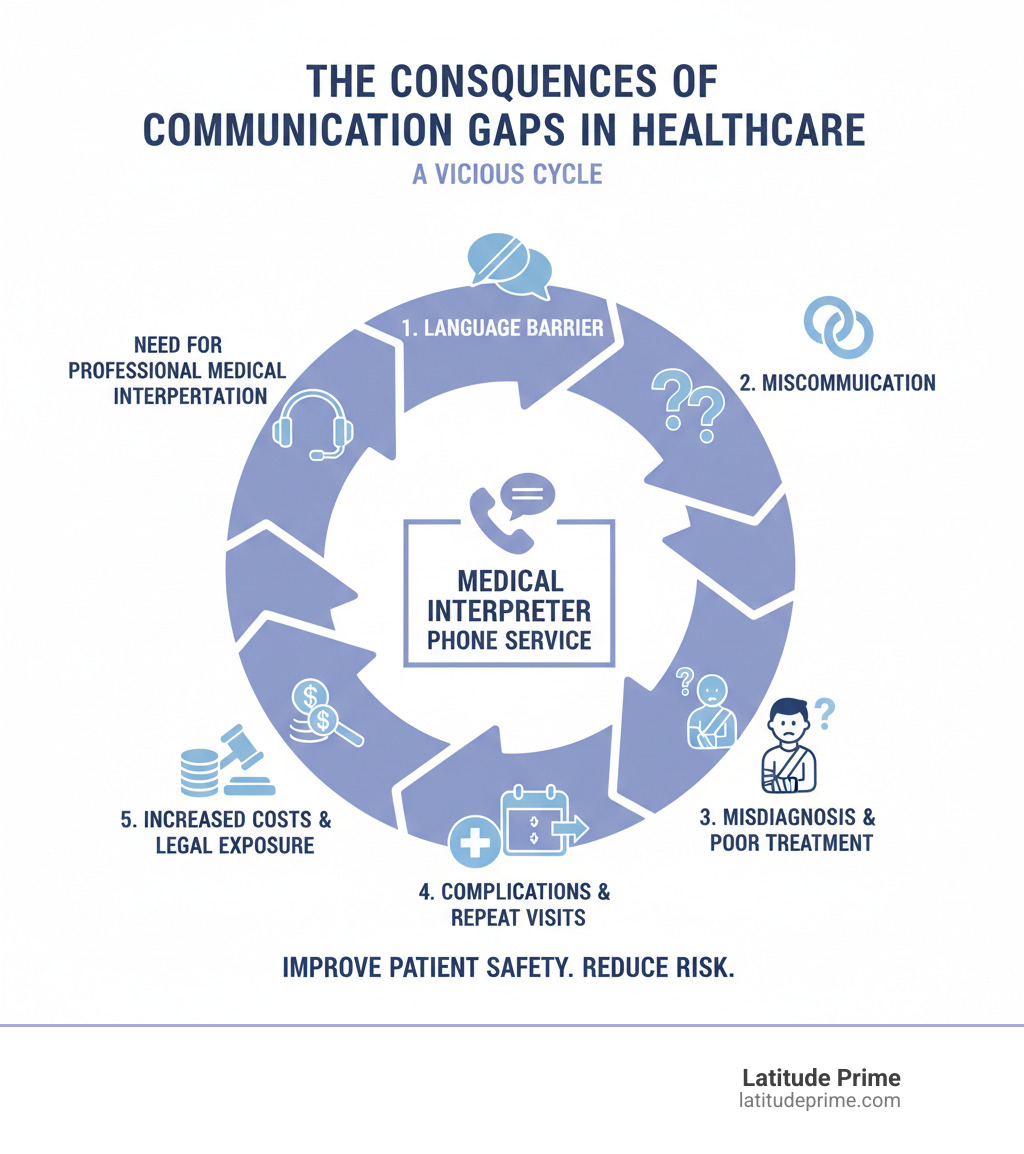
One fifth of the U.S. population speaks a language other than English at home. For healthcare providers, this creates a critical challenge: 55% of malpractice suits result from miscommunication. When a patient can’t understand their diagnosis, treatment plan, or medication instructions, the consequences extend far beyond inconvenience.
Language barriers lead to misdiagnosis, inadequate informed consent, poor treatment adherence, and increased readmission rates. They also result in lawsuits, repeat visits, and compromised patient safety. As one healthcare director noted, “It’s critical we have easy interpretation services available for the healthcare team” to ensure children’s care and their families’ experiences aren’t compromised by communication barriers.
Medical interpreter phone services solve this problem by providing instant access to qualified interpreters who understand medical terminology and HIPAA requirements. These services help healthcare organizations comply with Section 1557 of the Affordable Care Act, Title VI of the Civil Rights Act, and ADA regulations – while improving patient outcomes and satisfaction.
Understanding Your Interpretation Options
When a patient walks into your clinic and you don’t speak the same language, you need a solution—fast. Healthcare providers today have three main ways to bridge language gaps: phone interpretation, video interpretation, and bringing an interpreter on-site. Each has its place in modern healthcare, but they work very differently.
Understanding which method to use when can make the difference between a smooth patient encounter and a frustrating delay. Let’s break down your options, starting with the fastest and most accessible: over-the-phone interpreting.
What is Over-the-Phone Interpreting (OPI)?
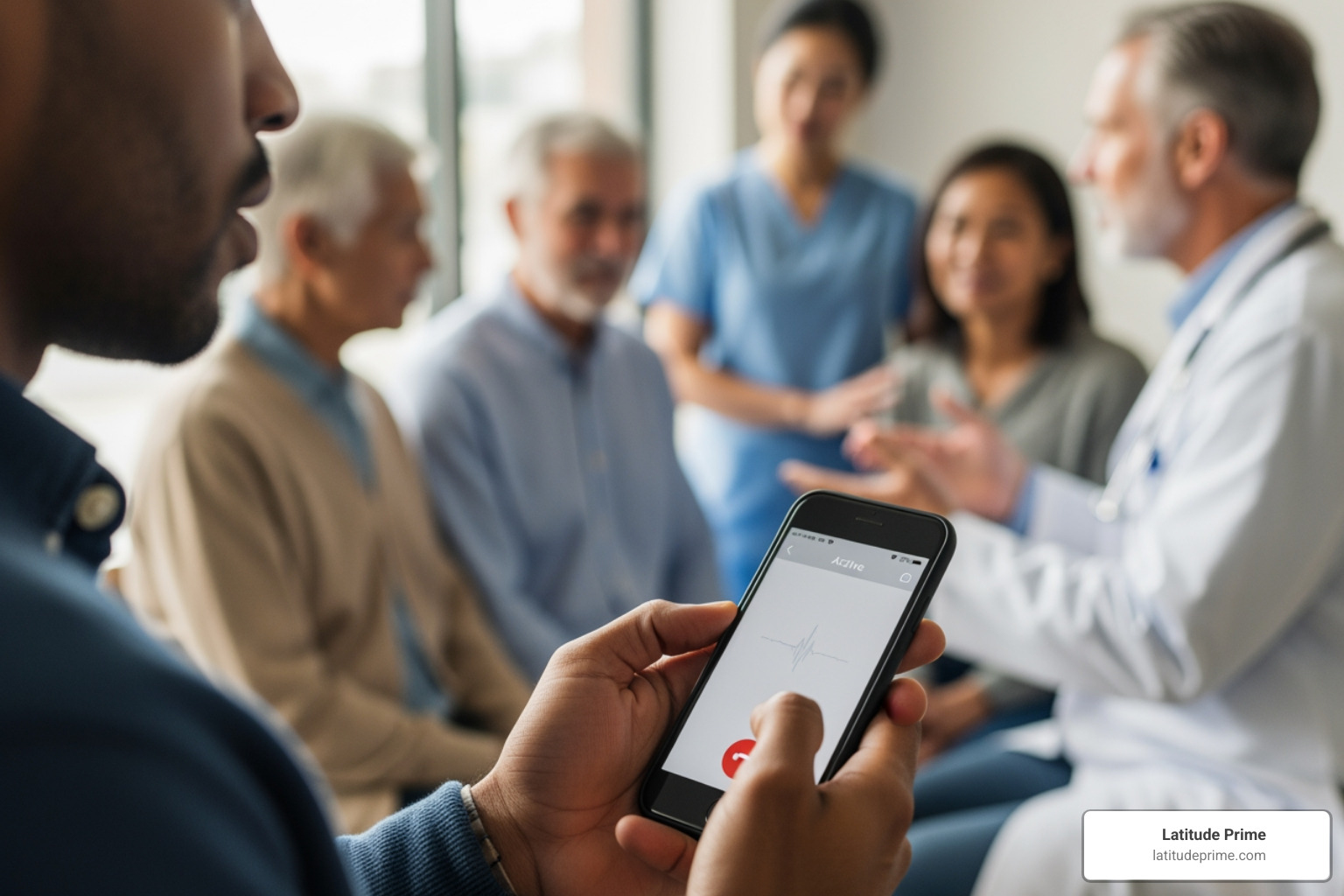
Think of over-the-phone interpreting (OPI) as having a professional medical interpreter on speed dial, ready to help 24 hours a day, 365 days a year. It’s an on-demand audio service that connects you with qualified interpreters through a simple phone call—no special equipment required.
The process couldn’t be simpler. You dial a dedicated phone number, enter your unique PIN, select the language you need, and within seconds you’re connected to a certified medical interpreter. That’s it. No scheduling, no waiting rooms, no complicated setup.
This medical interpreter phone service shines in everyday healthcare situations. Need to explain discharge instructions? Check a patient’s symptoms during a telehealth call? Verify medication allergies during intake? OPI handles these scenarios effortlessly. It’s particularly valuable in emergencies when every second counts and you can’t wait for someone to drive across town.
The technology has come a long way since the industry started back in 1982. Today’s services connect you to interpreters in an average of 13 to 20 seconds—faster than most people can find their car keys. You can access OPI from any phone, whether it’s the landline at the nurses’ station, your mobile device, or through a web browser. For a deeper look at where telephone interpreting excels, check out our guide on Telephone Interpreting: Where it Can Be Used and What Are the Advantages.
OPI vs. VRI and In-Person Interpreting
While OPI is incredibly efficient, it’s not always the right tool for every situation. Sometimes you need to see someone’s face. Other times, nothing beats having an interpreter physically present in the room. Here’s how the three main interpretation methods stack up:
| Feature | Over-the-Phone Interpreting (OPI) | Video Remote Interpreting (VRI) | In-Person Interpreting |
|---|---|---|---|
| Cost | Most affordable | Moderate | Highest |
| Speed/Availability | Fastest connection (13-20 seconds), 24/7/365 on-demand | Fast connection (under 30 seconds), 24/7 on-demand | Requires scheduling, less immediate |
| Best Use Cases | Routine calls, quick questions, follow-ups, emergencies | ASL, visual cues needed, sensitive topics, telehealth | Highly sensitive discussions, long appointments, complex |
| Technology Required | Any phone (landline or mobile), app, or web browser | Video-enabled device (tablet, computer, smartphone) | No special equipment, physical presence required |
Video Remote Interpreting (VRI) adds a visual dimension to remote interpretation. When you need to see facial expressions, demonstrate a physical therapy exercise, or communicate with someone who uses American Sign Language, VRI is your answer. It works just like OPI but through a video call instead of audio only.
The visual component makes VRI especially useful during telehealth appointments or when discussing sensitive topics where reading body language helps build trust. Some VRI platforms connect you to certified healthcare interpreters in less than 10 seconds and support hundreds of languages, including rare indigenous languages and ASL. Learn more about this option in our article on Video Medical Interpreter.
In-Person Interpretation brings a professional interpreter directly into the room with you and your patient. This method creates the most personal connection and works best for lengthy appointments, complex medical procedures, or deeply sensitive conversations where physical presence matters most.
The trade-off? On-site interpretation costs significantly more than phone or video options and requires advance scheduling. You can’t summon an in-person interpreter at 2 a.m. when a patient arrives in the emergency department. But for planned procedures or ongoing care relationships, the investment often pays off in stronger patient-provider bonds. When you need that level of service, our On-Site Interpretation Services deliver expert interpreters who understand both the language and the healthcare context.
The key is matching the method to the situation. Quick consultation? Grab the phone for OPI. Need to show something or work with a deaf patient? Fire up VRI. Planning a detailed treatment discussion for a cancer diagnosis? Schedule an in-person interpreter. Having all three options in your toolkit means you’re ready for whatever walks through your door.
Why a Medical Interpreter Phone Service is Essential for Modern Healthcare
When language barriers disappear, something remarkable happens in healthcare settings. Patients relax. They ask questions. They actually understand what’s happening to their bodies and what they need to do to get better. This isn’t just about feeling warm and fuzzy—it’s about fundamentally better healthcare.
A medical interpreter phone service transforms patient outcomes in measurable ways. When patients fully grasp their diagnosis and treatment plan, they’re far more likely to follow through correctly. They take medications as prescribed, show up for follow-up appointments, and recognize warning signs that need immediate attention. This dramatically reduces misdiagnosis rates and prevents complications that stem from simple misunderstandings.
Sobering statistic we mentioned earlier? Fifty-five percent of malpractice suits result from miscommunication. That’s not a small problem—it’s a crisis hiding in plain sight. Medical interpreter phone service directly addresses this risk by ensuring nothing gets lost in translation during critical conversations about consent, treatment options, or post-procedure care.
The impact extends beyond clinical outcomes to the patient experience itself. When someone walks into a hospital or clinic feeling vulnerable and encounters a healthcare team that can truly communicate with them, trust builds naturally. This isn’t just about words—it’s about dignity and respect. Interpreters who understand both language and culture help providers deliver care that feels personal and appropriate, not awkward or dismissive.

This commitment to clear communication is what health equity actually looks like in practice. Limited English Proficient (LEP) patients deserve the same quality of care as everyone else, and instant access to qualified interpreters makes that possible. No more asking family members to translate sensitive medical information. No more relying on staff members who happen to speak a bit of Spanish. Just professional, accurate interpretation when it’s needed.
From an operational perspective, the benefits are equally compelling. Healthcare teams face constant time pressure, and waiting around for interpretation help isn’t an option. With average connection times of 13 to 20 seconds, OPI services keep everything moving. Your staff can focus on providing care rather than scrambling to find language support.
That 24/7/365 availability matters more than you might think. Medical emergencies don’t wait for business hours, and neither do patients who speak Hmong, Karen, or Somali. Whether it’s 3 PM on a Tuesday or 3 AM on a Sunday, whether you need Spanish or a rare indigenous language, qualified interpreters are standing by. This constant readiness means your team never has to delay care or make do with inadequate solutions.
The speed and reliability of OPI dramatically increases staff productivity. Nurses don’t waste time tracking down bilingual colleagues. Front desk staff can complete patient intake efficiently. Doctors can conduct thorough consultations without frustration. Everyone can do their job properly, which ultimately means better care for more patients.
For healthcare organizations serving diverse communities, a reliable medical interpreter phone service isn’t optional—it’s essential infrastructure. It’s how modern healthcare delivers on its promise of quality care for everyone who walks through the door. To learn more about how interpretation supports comprehensive care delivery, explore our article on Interpreter Health and Social Care.
A Healthcare Provider’s Guide to Choosing an OPI Service
Selecting the right medical interpreter phone service is one of the most important decisions your healthcare organization will make. This choice affects everything from the quality of patient care to how efficiently your staff can work, and whether you’re meeting all those complex regulatory requirements. Let’s walk through what really matters.

Key Features of a Top-Tier Medical Interpreter Phone Service
When you’re evaluating potential OPI providers, some features should be absolute deal-breakers. Think of it like hiring a new team member—you want someone who’s qualified, reliable, and ready when you need them.
Language coverage is your first checkpoint. Spanish interpretation is essential, but what happens when a patient speaks Hmong, Karen, or Tigrinya? A comprehensive medical interpreter phone service should offer 250+ languages and dialects at minimum, with the best providers reaching 350 or more. This breadth ensures that no patient walks through your doors without the ability to communicate clearly.
Interpreter qualifications separate the exceptional services from the mediocre ones. Medical interpretation isn’t just about speaking two languages—it requires specialized expertise. The interpreters you work with should have rigorous medical training, often exceeding 120 hours, covering everything from complex medical terminology to patient confidentiality protocols and cultural sensitivity. They should hold relevant certifications and complete continuing education, typically around 10 hours annually, to stay current with medical advancements and best practices.
The technology platform itself deserves careful scrutiny. A reliable system means constant connectivity monitoring and state-of-the-art infrastructure that delivers crystal-clear audio quality. You should expect fast connection speeds—ideally around 13-15 seconds for most languages, never exceeding 20 seconds. When someone’s in pain or distress, every second counts.
Integration capabilities can transform how your team works. The best platforms connect seamlessly with your existing EHR systems like Epic and Cerner, your telehealth platforms such as Zoom and Teladoc, and offer SIP connectivity for simple click-to-connect access. When interpretation fits naturally into your workflow rather than disrupting it, staff adoption soars and patient care flows smoothly.
Ensuring Compliance with a Medical Interpreter Phone Service
Compliance isn’t just about avoiding penalties—it’s about protecting your patients and your organization. The right medical interpreter phone service makes regulatory adherence straightforward rather than stressful.
HIPAA compliance forms the foundation. Every conversation involving patient information must be secure and private, period. This means end-to-end data encryption, secure platforms with strict access controls, regular security audits, and interpreters who understand that confidentiality isn’t optional. At Latitude Prime, our infrastructure, processes, and resources meet 100% of global security standards, ensuring your data stays private. For a deeper understanding of these requirements, the CDC provides comprehensive Information on the Health Insurance Portability and Accountability Act (HIPAA).
Beyond HIPAA, your provider should help you meet federal regulations that protect patient rights. Section 1557 of the Affordable Care Act prohibits discrimination based on race, national origin, sex, age, or disability. Title VI of the Civil Rights Act ensures language access for LEP individuals. The Americans with Disabilities Act (ADA) guarantees accessibility for Deaf and hard-of-hearing patients. A quality OPI service doesn’t just acknowledge these laws—it actively helps you comply with them.
Quality assurance programs reveal how seriously a provider takes their work. Look for continuous performance monitoring, regular feedback mechanisms, and adherence to national healthcare standards. Some providers conduct daily random quality checks to ensure interpreters consistently follow their code of conduct. ISO certifications signal a commitment to consistent quality and continuous improvement across all services.
When you choose a provider that excels in these areas, you’re not just checking boxes. You’re investing in a partnership that strengthens patient safety, simplifies regulatory compliance, and helps your organization deliver better care to everyone who walks through your doors. For more insights on why professional expertise matters in healthcare language services, explore our article on Understanding Medical Translation and Why You Should Hire a Professional.
Frequently Asked Questions about OPI in Healthcare
We know that adding a new service to your healthcare workflow comes with questions. Here are the most common ones we hear from providers considering medical interpreter phone service:
How quickly can I connect to a medical interpreter?
Speed matters in healthcare, and that’s where OPI truly shines. For most commonly spoken languages, you’re looking at remarkably fast connection times—often as quick as 13 to 20 seconds on average. Some providers even report connections in under 13 seconds for high-demand languages like Spanish, Mandarin, or Arabic.
This on-demand access is available 24/7/365, which means whether you’re handling a routine check-up at 2 PM or an emergency admission at 2 AM, qualified interpreters are standing by. No scheduling, no waiting—just immediate language support when you need it most.
Are phone interpretation sessions secure and confidential?
Yes, absolutely. Security and confidentiality aren’t just priorities for reputable medical interpreter phone services—they’re requirements. The sensitive nature of medical conversations demands nothing less than complete protection.
Reputable providers use HIPAA-compliant platforms with end-to-end encryption to safeguard every conversation. This includes secure data transmission, strict access controls, and regular security audits to identify and address any vulnerabilities. At Latitude Prime, our infrastructure, processes, and resources are 100% compliant with global security standards, ensuring your patients’ privacy is protected at every step.
Beyond the technology, interpreters themselves are held to the highest standards. They undergo thorough background checks, receive extensive training on confidentiality protocols, and are required to sign strict confidentiality agreements before ever taking a call. They understand that what happens in a medical conversation stays confidential—always.
For more information on healthcare privacy regulations, you can review the Information on the Health Insurance Portability and Accountability Act (HIPAA).
How does OPI handle American Sign Language (ASL)?
Here’s where it’s important to understand the limitations of over-the-phone interpreting. OPI is audio-only, which means it cannot accommodate American Sign Language (ASL) or other visual sign languages. These languages rely entirely on visual communication—hand shapes, facial expressions, and body language—none of which can be conveyed over a phone call.
For Deaf and hard-of-hearing patients who use ASL, Video Remote Interpreting (VRI) is the necessary remote solution. VRI connects patients with certified ASL interpreters via video call, providing the visual component essential for effective communication. Many comprehensive language service providers, including Latitude Prime, offer both OPI and VRI services, allowing you to choose the right modality for each patient’s needs.
The good news is that switching between OPI and VRI is often seamless when you work with an integrated platform. Your staff can quickly access whichever service the situation requires, ensuring every patient receives appropriate language support. To learn more about visual interpretation options, check out our guide on Video Remote Interpreting for Healthcare.
Conclusion: Bridging Communication Gaps in Patient Care
Throughout this guide, we’ve explored how a medical interpreter phone service transforms the way healthcare providers communicate with their diverse patient populations. It’s not just another administrative tool—it’s a lifeline that connects providers and patients in meaningful, life-changing ways.
When language barriers disappear, remarkable things happen. Patients understand their diagnoses. They follow treatment plans correctly. They trust their healthcare providers. And providers? They can focus on what they do best—delivering exceptional care—without worrying about miscommunication that could lead to serious consequences. 55% of malpractice suits stem from miscommunication, making OPI services not just beneficial but essential.

Beyond improving patient outcomes and satisfaction, these services help your organization stay compliant with federal regulations like HIPAA, Section 1557 of the ACA, Title VI of the Civil Rights Act, and the ADA. But compliance is just the baseline. What truly matters is the health equity these services provide—ensuring that every patient, no matter what language they speak, receives the same quality of care and respect.
As you evaluate providers for your organization, keep your focus on three key areas: quality, compliance, and technology. You need extensive language coverage that includes rare dialects, not just common languages. Your interpreters should have rigorous medical training and ongoing education. And the platform itself should integrate seamlessly with your existing EHR systems and telehealth platforms while maintaining the highest security standards.
At Latitude Prime, we’ve built our reputation on exactly these principles. Our ISO-certified quality management system ensures consistent excellence across every interaction. Our network of expert linguists spans over 300 languages, with specialists who understand both the technical language of healthcare and the cultural nuances that make communication truly effective. We’re not just translating words—we’re fostering genuine understanding between you and every patient you serve.
Ready to eliminate language barriers in your healthcare organization? Find how our comprehensive Medical and Healthcare Translation and Interpretation Services can support your team in delivering equitable, high-quality care to every patient who walks through your doors.
