

English to Spanish medical: Critical 2025 Tools
Why Medical Translation Tools Matter for Healthcare Professionals
English to Spanish medical translation resources are vital for healthcare providers serving the growing Hispanic population in the United States. For physicians, nurses, and emergency responders, quick access to accurate medical terminology can prevent dangerous misunderstandings when an interpreter isn’t immediately available.
Top Resources for English to Spanish Medical Translation:
- Specialized Medical Dictionaries – Digital and print resources focused on healthcare terminology.
- MedlinePlus Español – A free government health information portal with comprehensive Spanish translations.
- Professional Translation Platforms – ISO-certified services for complex medical documents.
- Medical Spanish Training Programs – Structured courses for healthcare professionals.
- Bilingual Health Glossaries – Downloadable resources from academic institutions.
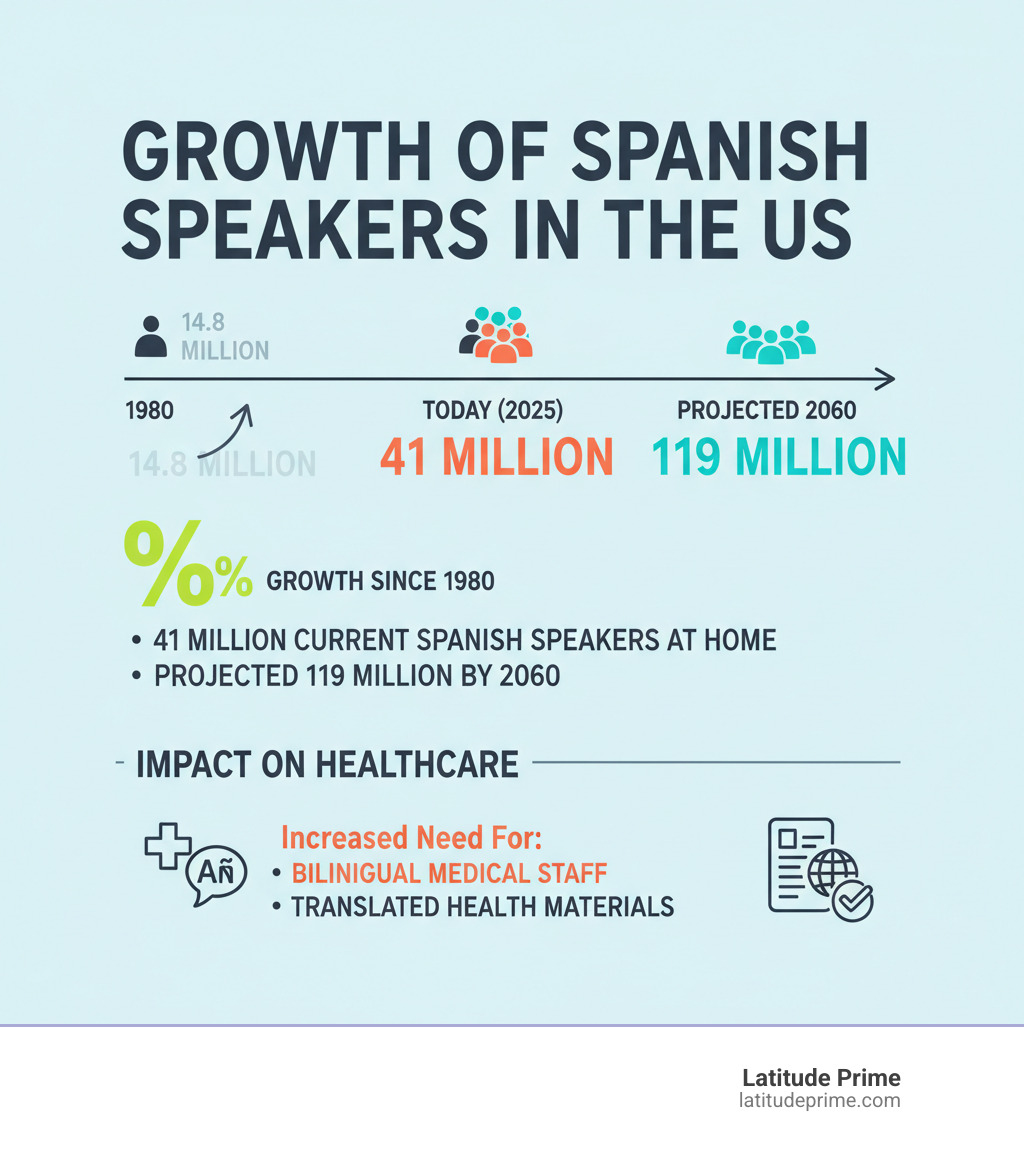
With over 41 million people in the US speaking Spanish at home and a projected Hispanic population of 119 million by 2060, the need for bilingual communication in healthcare is undeniable. This demographic shift creates a responsibility for medical professionals to bridge language gaps, especially during critical moments.
Having the right translation tools is essential. From emergency rooms to routine checkups, being able to ask “¿Dónde le duele?” (Where does it hurt?) or explain “Voy a tomarle la presión arterial” (I am going to take your blood pressure) builds trust and improves patient outcomes.
However, medical translation is complex. Terms can have multiple meanings, and false cognates can lead to serious errors. For example, the English word “anthrax” is “carbunco” in medical Spanish, not “ántrax” (which means a skin abscess). Miscommunication can lead to misdiagnosis or improper treatment.
I’m William Kennedy, a Translation Project Manager with over a decade of experience in English to Spanish medical translation. I’ve seen how the right resources can bridge critical communication gaps in healthcare.
Why Accurate Medical Translation is Critical for Patient Care
In healthcare, precision saves lives. For millions of Spanish-speaking patients in the US, accurate English to Spanish medical translation is a fundamental component of safe, effective care. A misunderstood symptom can lead to a misdiagnosis, while a poorly translated medication instruction could result in a dangerous dosing error.
Beyond preventing medical errors, accurate translation builds trust. When patients feel understood in their native language, they are more likely to share sensitive health information, ask questions, and follow treatment plans. This is also a legal and ethical obligation. Informed consent requires patients to fully grasp the risks and benefits of procedures, which is impossible without clear communication. Resources like Health Information in Spanish from MedlinePlus provide trusted, professionally translated information that supports this goal.
Better communication leads to better health outcomes, lower readmission rates, and higher patient satisfaction. An English to Spanish medical dictionary is an essential tool that helps make this possible.
Common Communication Challenges in Healthcare
Communicating across languages in healthcare presents several challenges beyond basic vocabulary. These include:
- Language Barriers: Medical terminology is a specialized language that standard Spanish courses don’t cover.
- Cultural Differences: Beliefs about health, illness, and family involvement in medical decisions vary across Spanish-speaking cultures.
- Low Health Literacy: Medical jargon is confusing in any language, and this difficulty is amplified for non-native speakers.
- Colloquialisms and Regionalisms: A symptom may have different names depending on whether a patient is from Mexico, Puerto Rico, or Argentina. “Gripe” can mean a cold or the flu, depending on the region.
- False Cognates: Words that look similar but have different meanings can be dangerous. “Embarazada” means pregnant, not embarrassed, and “constipado” refers to a head cold, not constipation.
- Patient Anxiety: The stress of being sick in an unfamiliar environment can make it harder for patients to communicate clearly.
The Role of an English to Spanish Medical Dictionary
A quality English to Spanish medical dictionary is a practical tool that addresses many of these challenges. It bridges communication gaps in real time, providing precise terminology when you need to explain a concept or understand a patient’s description. In emergencies, this immediate access to accurate translations can be crucial.
By helping you clarify terms, a dictionary ensures you and your patient are on the same page, reducing ambiguity and preventing misinterpretations. This clarity aids in accurate diagnosis, as you can correctly identify symptoms like “ardor de estómago” (heartburn). Most importantly, it improves patient instructions for medication and post-discharge care. Patients cannot follow plans they don’t understand, and a dictionary empowers you to deliver clear instructions that lead to better recovery.
Your Guide to Essential English to Spanish Medical Resources
Finding the right English to Spanish medical resources is easier once you know where to look. The landscape has evolved from heavy printed books to a rich ecosystem of digital tools designed for healthcare professionals.

Digital dictionaries are a popular choice for their portability and searchability, but it’s crucial to use one designed for medical terminology. A standout is Stedman’s Medical Dictionary English To Spanish And Spanish To English, which provides context, regional variations, and explanations of medical concepts.
Government health websites like MedlinePlus Español offer vast amounts of reliable, vetted health information in clear, accessible Spanish. The CDC and NIH also provide Spanish-language materials on public health topics, such as vaccine information and disease prevention.
Professional translator communities, such as Tremédica, the International Association of Translators and Editors in Medicine, offer deep insights into complex translation scenarios. These communities produce valuable resources like the “Libro Rojo” (Dictionary of Doubts and Difficulties), which addresses nuanced translation challenges.
Key Features of an English to Spanish Medical Dictionary
When choosing a resource for English to Spanish medical translation, look for these key features:
- Phonetic Pronunciation Guides and Audio: These are crucial for pronouncing terms correctly, which builds patient trust and ensures clarity.
- Contextual Examples: Seeing how terms are used in clinical conversations helps you move beyond literal translations to more natural-sounding Spanish.
- Regional Variations: Spanish is not monolithic. A good dictionary will note different terms used in Mexico, Puerto Rico, or Argentina, reflecting the diversity of patients in the US.
- Inclusion of Informal Terms: Patients often use colloquial expressions to describe symptoms (e.g., “dolor en la boca del estómago” for upper abdominal pain). A dictionary that includes these terms is invaluable.
- Regular Updates: Medicine is constantly evolving. A dictionary that is regularly updated with new terminology remains a relevant and reliable tool.
Top Online Resources and Communities
Here are some of the most valuable online resources for English to Spanish medical communication:
- MedlinePlus Español: A U.S. government site with reliable, patient-friendly health information on hundreds of conditions, translated into clear Spanish.
- Health Information Translations: Offers ready-to-use, bilingual patient education handouts on common conditions and procedures.
- Tremédica and MedTrad: Professional communities where experienced medical translators discuss real-world translation challenges and share expertise.
- Government Health Portals (CDC, NIH): These agencies publish authoritative Spanish-language materials on public health topics, vaccination, and disease prevention.
Key Categories of Medical Vocabulary
To improve your English to Spanish medical communication, it helps to organize vocabulary into essential categories that appear in daily clinical practice.
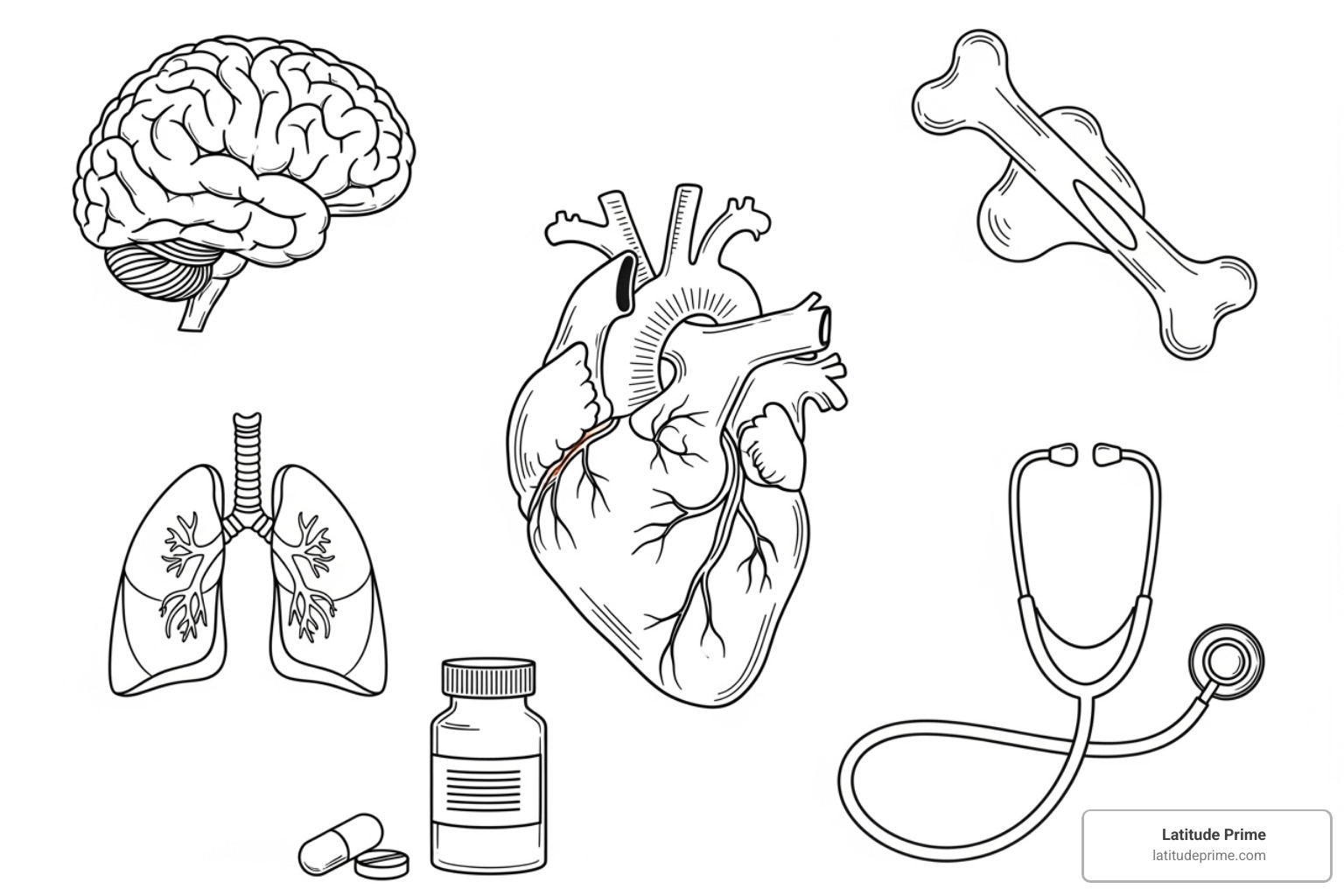
A comprehensive medical dictionary should cover these core areas:
- Anatomy and Body Parts: The foundation of assessment. Includes terms like “cabeza” (head), “corazón” (heart), “hueso” (bone), and “pulmón” (lung).
- Symptoms and Complaints: The language of the patient’s experience. Key terms are “dolor” (pain), “fiebre” (fever), “tos” (cough), “náuseas” (nausea), and “mareo” (dizziness).
- Medical Procedures and Tests: Essential for explaining procedures and reducing patient anxiety. Includes “radiografía” (X-ray), “análisis de sangre” (blood test), and “cirugía” (surgery).
- Diagnoses and Conditions: For discussing test results and health issues. Covers common conditions like “diabetes,” “hipertensión” (high blood pressure), and “cáncer” (cancer).
- Pharmacy and Medication: Critical for patient safety. Includes “medicamento” (medicine), “dosis” (dosage), “pastilla” (pill), and “efectos secundarios” (side effects).
- Greetings and Basic Questions: The entry point to building rapport. Simple phrases like “¿Cómo está?” (How are you?) set a welcoming tone.
Building your knowledge across these categories will equip you to provide more competent and compassionate care.
Common Phrases for English to Spanish Medical Communication
While vocabulary is key, conversations happen in phrases. Mastering a set of common phrases for English to Spanish medical communication is essential for smooth clinical dialogue.
Patient Intake:
- “¿Cómo se llama?” (What is your name?)
- “¿Cuál es el motivo de su visita?” (What brings you here today?)
- “¿Es alérgico/a a algún medicamento?” (Are you allergic to any medication?)
- “¿Toma algún medicamento actualmente?” (Are you currently taking any medication?)
Examination and Symptoms:
- “¿Dónde le duele?” (Where does it hurt?)
- “¿Desde cuándo le duele?” (How long have you had this pain?)
- “Voy a tomarle la presión arterial.” (I am going to take your blood pressure.)
- “Respire profundo, por favor.” (Breathe deeply, please.)
Diagnosis and Instructions:
- “Usted tiene…” (You have…)
- “Necesita tomar este medicamento.” (You need to take this medication.)
- “Vuelva en una semana.” (Come back in one week.)
- “¿Entiende lo que le he dicho?” (Do you understand what I have told you?)
Practicing these phrases helps create more natural, empathetic interactions that reduce patient anxiety and improve outcomes. The goal is connection and clarity in moments that matter.
Beyond the Dictionary: The Path to Medical Spanish Proficiency
While an English to Spanish medical dictionary is an invaluable tool, true proficiency requires more than looking up words. It involves practice, cultural understanding, and a genuine commitment to the patients you serve. This journey of professional development shows patients you care enough to meet them where they are, fostering equitable care.
Developing cultural competency is a critical part of this journey. Patients from different Spanish-speaking regions may have unique health beliefs, communication styles, and expectations about family involvement. Understanding these nuances allows you to build rapport and tailor your communication effectively. Speaking even basic Spanish can transform the patient interaction, fostering trust and encouraging patients to share important health details.
Proficiency allows for nuanced communication, helping you pick up on subtle cues and understand patient beliefs about health and healing. This leads to better shared decision-making and treatment adherence. Your dictionary remains a constant companion for reinforcing vocabulary, but there are times when more support is needed.
For complex diagnoses, informed consent, or sensitive end-of-life discussions, certified medical interpreters are essential. At Latitude Prime, we provide certified, ISO-compliant medical translation and interpretation services because we understand that accuracy and cultural nuance can be matters of life and death. You can find more info about professional medical translation services on our website.
How to Effectively Use Translation Tools
To get the most out of English to Spanish medical dictionaries and other tools, follow these best practices:
- Use for single words or short phrases, not full sentences. AI tools can struggle with complex medical jargon.
- Verify understanding with the patient. Ask “¿Me entiende?” (Do you understand me?) to ensure your message was received correctly.
- Use audio pronunciation features. Correct pronunciation builds credibility and prevents misunderstandings.
- Combine with visual aids. Anatomical charts, pictures, and demonstrations can transcend language barriers.
- Know when to call a professional interpreter. For critical situations like diagnoses, consent, or complex treatment plans, a certified interpreter is non-negotiable. It is a sign of professional integrity to know the limits of your tools and skills.
The Benefits of Learning Medical Spanish
Investing time in learning medical Spanish provides numerous benefits for your practice and career:
- Improved Quality of Care: Direct communication reduces diagnostic errors and ensures patients fully understand treatment plans.
- Increased Efficiency: Streamlining patient encounters without waiting for an interpreter keeps appointments on schedule.
- Improved Career Opportunities: Bilingual healthcare professionals are in high demand, especially in cities like Miami, San Diego, and Washington D.C.
- Stronger Patient Relationships: Speaking a patient’s native language builds trust and rapport, leading to more fulfilling interactions.
- Reduced Reliance on Ad-hoc Interpreters: Handling routine interactions yourself frees up professional interpreters for the most critical situations.
Frequently Asked Questions about English to Spanish Medical Translation
When it comes to English to Spanish medical translation, healthcare professionals often have pressing questions about using tools correctly and safely. Here are answers to some of the most common inquiries.
Can I use a consumer translation app like Google Translate for patients?
No. Using consumer apps like Google Translate for patient communication is a significant risk. The core issue is that consumer apps lack the medical accuracy, context, and security (HIPAA compliance) required in healthcare.
A general app can easily mistranslate specialized terms or fall for false cognates (e.g., translating “constipated” to “constipado,” which means to have a cold). Furthermore, entering patient information into a non-secure app can violate HIPAA privacy rules. These tools are not a substitute for professional medical dictionaries or certified interpreters.
What’s the difference between a medical dictionary and a professional interpreter?
This is a critical distinction. A medical dictionary is a tool for translating specific words or simple phrases. It’s a reference companion for quick lookups, like finding the Spanish term for “blood pressure” (“presión arterial”).
A professional interpreter facilitates live, nuanced, and culturally sensitive conversation, which is essential for complex diagnoses, consent, and patient education. They do more than swap words; they convey meaning, tone, and cultural context. Use a dictionary for vocabulary support and an interpreter for comprehensive communication.
How do I handle regional differences in Spanish medical terms?
Spanish is spoken in over 20 countries, so regional variations are common. A good dictionary may note regionalisms, indicating which terms are used in different areas.
When in doubt, use the most neutral term possible or ask the patient for clarification by saying, “¿Cómo le llama usted a esto?” (What do you call this?). This respectful approach ensures clarity and shows cultural sensitivity.
This is also where a professional interpreter’s expertise is invaluable, as they are trained to steer regional dialects seamlessly. For certified, ISO-compliant medical translation and interpretation that accounts for these nuances, contact our experts today.
Conclusion
Clear communication is the foundation of safe, effective healthcare. For the over 41 million Spanish speakers in the United States, the ability to communicate accurately in medical settings is not a courtesy—it’s a necessity.
An English to Spanish medical dictionary is your linguistic first-aid kit, perfect for clarifying a term, understanding a symptom, or explaining a basic procedure when an interpreter isn’t immediately available. It empowers you to bridge communication gaps with greater confidence.
However, dictionaries have their limits. They cannot convey empathy, read cultural cues, or steer the emotional complexity of a difficult diagnosis. For critical situations—informed consent, complex diagnoses, and sensitive discussions—professional medical interpreters are essential. They provide the human element, accuracy, and cultural expertise that no tool can replicate.
At Latitude Prime, we understand that effective communication is the heart of healthcare. Our ISO-certified quality management system and network of expert linguists ensure you receive precise, culturally sensitive English to Spanish medical translation and interpretation. We serve diverse communities from Minneapolis to Miami and San Diego to Washington D.C., because every patient deserves to be understood.
Whether you are building your medical Spanish skills or need certified support for complex clinical situations, we are here to help. For certified, ISO-compliant medical translation and interpretation, contact our experts today.
