

Spanish to English Medical Translation: Ultimate 2025
Why Spanish to English Medical Translation is Critical
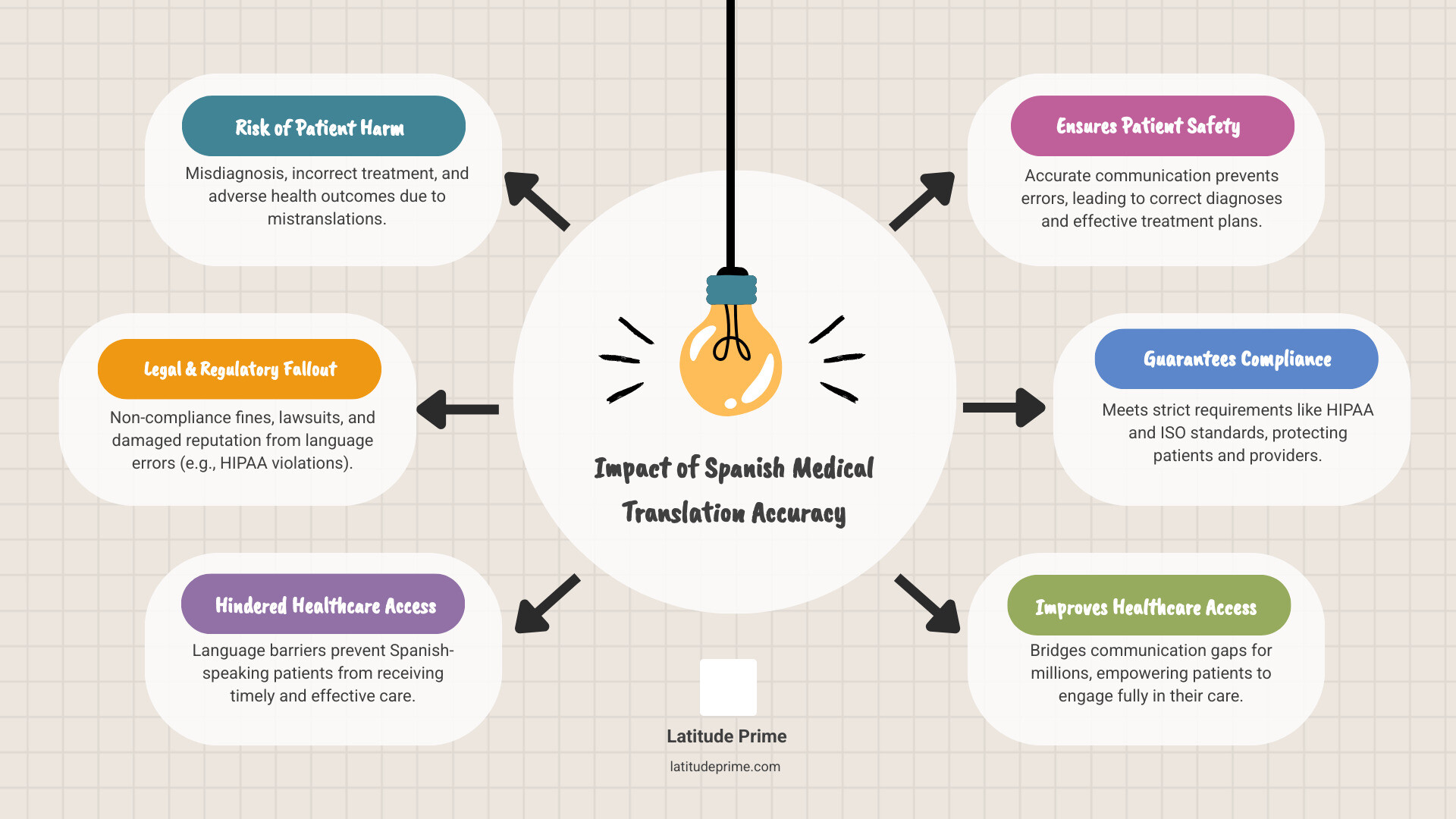
For those seeking spanish to english medical translation resources, its importance cannot be overstated. It is the essential bridge connecting Spanish-speaking patients with healthcare providers and the global medical community. In a field where precision can mean the difference between life and death, accurate translation is critical.
- Ensures Patient Safety: Prevents misdiagnosis, mistreatment, and adverse health outcomes.
- Guarantees Legal & Regulatory Compliance: Meets requirements like HIPAA and ISO standards.
- Improves Healthcare Access: Bridges communication gaps for millions of Spanish-speaking patients.
- Facilitates Medical Advancement: Supports global research, clinical trials, and information sharing.
With over 57 million Spanish speakers in the United States, the demand for accurate medical translation is immense. Misinterpretations can lead to harmful outcomes, while professional translation ensures that vital information—from patient records to clinical trial data—is perfectly understood. This upholds patient care and accelerates global medical knowledge.
I’m William Kennedy, and with over a decade of experience in language project management, I’ve seen how crucial precise spanish to english medical translation is for global health communication. My background in language and business strategy helps bridge the gap between complex medical content and clear, accurate communication.
Key Challenges and Common Documents
Spanish to english medical translation is far more than swapping words; it’s a complex process where precision can save a life. The medical field uses its own specialized language, and getting the terms exactly right is crucial for patient care and clear global communication.
Common Challenges in Spanish to English Medical Translation
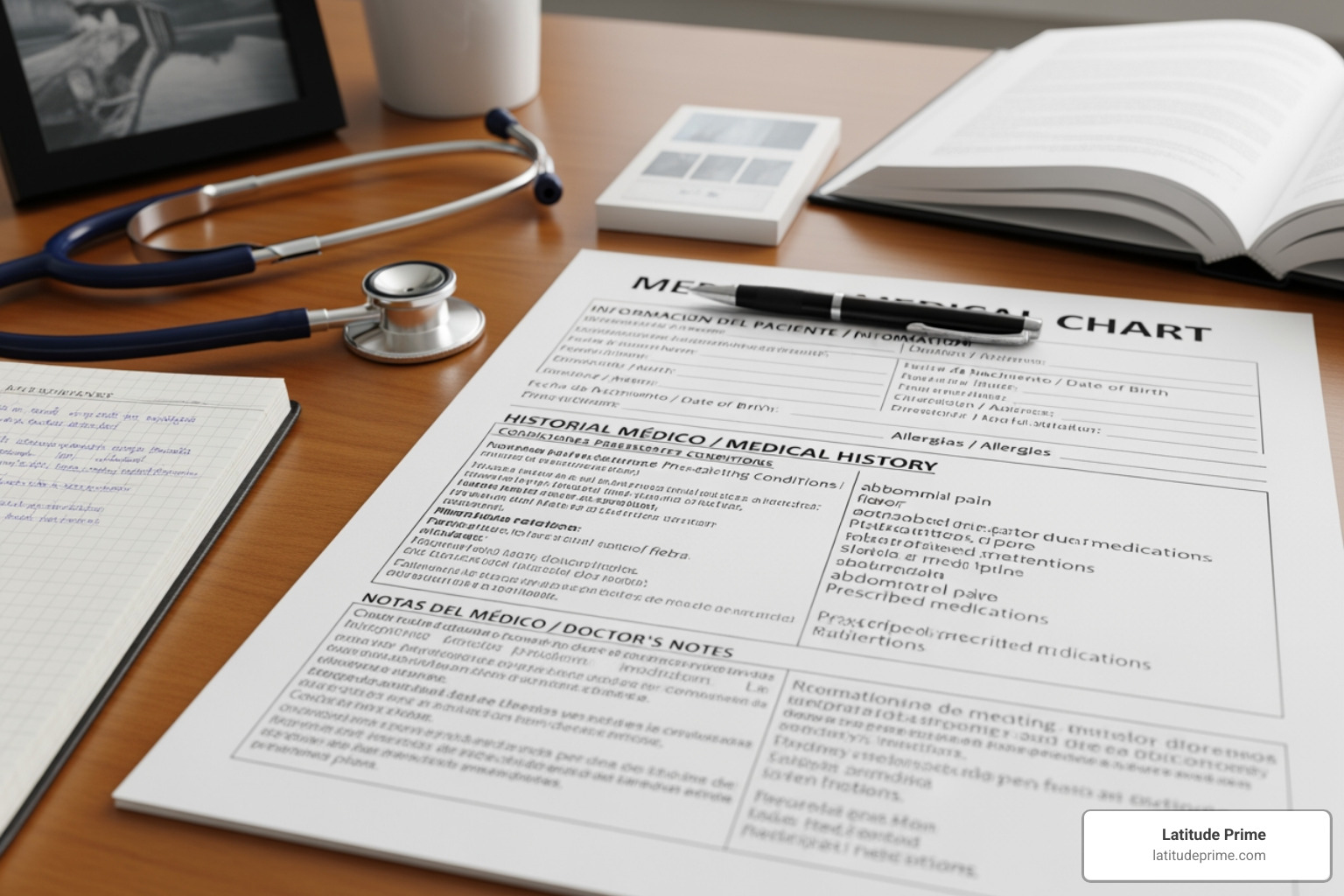
Translating medical documents involves more than just language proficiency; it requires navigating deep medical and cultural layers. Key challenges include:
- Specialized Terminology: Medical texts are filled with jargon for conditions, procedures, and medicines that demand expert knowledge.
- False Friends: Words that look similar but have different meanings (e.g., “embarazada” means “pregnant,” not “embarrassed”) can cause dangerous misunderstandings.
- Regional Dialects: Spanish varies between Spain and Latin America. A skilled translator knows these differences, such as “gripa” (Mexico) vs. “resfriado” (Spain) for a cold.
- Cultural Nuances: How patients describe symptoms and understand health is shaped by culture. Translations must be culturally appropriate to be effective.
- Abbreviations and Eponyms: Terms like “MRI” or “Parkinson’s disease” need careful handling to ensure clarity for the target audience.
- High-Stakes Accuracy: Unlike other fields, a small error in medical translation can be life-threatening, making rigorous quality control essential.
- Regulatory and Formatting Needs: Translations must often adhere to different countries’ legal standards and preserve complex document layouts.
For more detailed insights into how we tackle these challenges, you can explore our general approach to document translation services.
Medical Documents That Require Translation
The need for spanish to english medical translation spans all of healthcare and life sciences. We regularly translate a wide array of documents:
- Patient Records: Medical histories, lab results, and prescriptions for continuity of care.
- Informed Consent Forms (ICFs): To ensure patients fully understand procedures and risks before giving consent.
- Clinical Trial Documents: Study protocols, investigator brochures, and regulatory submissions for global trials.
- Medical Device Manuals (IFUs): Instructions for use that must be clear and accurate for user safety.
- Pharmaceutical Labels: Drug information, dosages, and warnings to prevent medication errors.
- Hospital Discharge Summaries: Crucial information for post-hospital and follow-up care.
- Medical Marketing & Education Materials: Brochures, websites, and leaflets to reach Spanish-speaking communities.
- Scientific Articles and Research Papers: To share medical knowledge and research findings globally.
- Official Documents: Vaccination records, birth/death certificates, and hospital intake forms.
- Other Critical Materials: Psychological evaluations, HIPAA notices, healthcare websites, and patents.
Best Practices for High-Quality Spanish to English Medical Translation
In spanish to english medical translation, quality is everything. A single error can change a diagnosis or put a patient at risk. Our approach combines human expertise, smart technology, and rigorous attention to detail to ensure the highest level of accuracy.
- Subject Matter Expertise: Our translators aren’t just linguists; many have backgrounds as doctors, nurses, or pharmacists. They understand the medical concepts behind the words, ensuring precise and contextually accurate translations.
- Rigorous Quality Assurance: Every translation is reviewed by multiple experts. Our process includes translation, editing, and proofreading (TEP). For critical documents, we may use back-translation—translating the document back to the original language to verify accuracy.
- Terminology Management: We use custom glossaries and termbases to ensure that terms like “hypertension” are translated consistently across all documents, preventing confusion and improving clarity.
- Translation Memory (TM): This technology stores previously translated sentences, allowing us to maintain consistency, speed up delivery, and reduce costs on repetitive content.
- Cultural Sensitivity Reviews: Our translators understand regional and cultural nuances in Spanish-speaking communities, ensuring the content is appropriate and effective for the target audience. This level of care is why you should hire a professional.
Qualifications for a Spanish to English Medical Translator
The qualifications for our medical translators are rigorous, as the work demands nothing less. We require:
- Native Fluency: Native-level command of both Spanish and English to capture idioms, cultural references, and subtle shifts in meaning.
- Medical Background: Formal education or professional experience in healthcare is non-negotiable. This allows translators to understand complex medical concepts fundamentally.
- Specialized Certifications: Credentials from organizations like the American Translators Association (ATA) demonstrate a commitment to professional standards.
- Years of Experience: Seasoned translators have encountered countless challenges and developed an instinct for spotting potential errors.
- Cultural Competency: Understanding how different cultures view health helps convey information with the appropriate tone and detail.
The Role of Technology in Enhancing Quality
Technology doesn’t replace our human experts; it empowers them. We use a Human-in-the-Loop (HITL) approach to combine the best of both worlds.
- CAT (Computer-Assisted Translation) Tools: These platforms integrate translation memory, terminology databases, and quality checks, helping translators work faster and more consistently.
- AI-Powered Translation: We use advanced AI engines trained on medical content to produce first drafts, which are then thoroughly edited by human medical experts. Generic tools like Google Translate are never used for medical documents due to their lack of accuracy and security.
- Terminology Databases and Glossaries: These digital resources ensure that every translator on a project uses the same approved medical terms for consistency.
- Quality Assurance Software: Automated tools check for common errors like spelling, number discrepancies, and terminology compliance, freeing human reviewers to focus on more complex issues.
Despite these advances, machine translation has significant limitations. It cannot understand context, cultural nuance, or ethical considerations. That’s why we rely on human expertise for the judgment, understanding, and accountability that medical translation demands.
Translation vs. Interpretation: What’s the Difference?
While often used interchangeably, “translation” and “interpretation” are distinct services vital for bridging language barriers in healthcare. Understanding the difference helps you choose the right service for clear communication.
In short, translation deals with the written word (documents, forms), while interpretation handles the spoken word (live conversations). A translator needs excellent writing and research skills, while an interpreter relies on active listening and quick thinking.
Here’s a quick comparison:
| Feature | Medical Translation | Medical Interpretation |
|---|---|---|
| Medium | Written text | Spoken word |
| Timing | Asynchronous (done after the original is created) | Real-time / Synchronous (happens live) |
| Output | A written document | Oral communication |
| Skill Set | Excellent writing, research, terminology management, subject-matter expertise | Active listening, memory, quick thinking, cultural mediation, interpersonal skills |
| Use Cases | Patient records, informed consent forms, research papers, drug labels | Doctor-patient consultations, emergency room visits, telehealth appointments, family meetings |
When to Use Medical Translation
Use professional spanish to english medical translation for any written material to ensure clarity, legal compliance, and full comprehension. This includes:
- Patient Forms and Records: Intake forms, medical histories, lab results, and discharge instructions.
- Research and Regulatory Documents: Clinical studies, journal articles, medical device instructions, and pharmaceutical labels.
- Marketing and Educational Materials: Brochures, websites, and patient education leaflets for Spanish-speaking communities.
For a comprehensive look at how we can assist with your written communication needs, explore our More info about our translation services.
When to Use Medical Interpretation
Medical interpretation is for bridging language gaps in real-time, spoken conversations. It facilitates immediate understanding in dynamic healthcare settings, such as:
- Live Appointments: Consultations between doctors and Spanish-speaking patients.
- Emergency Situations: Urgent medical scenarios where immediate, precise communication is life-saving.
- Telehealth Calls: Remote interpretation for virtual care appointments.
- Family Meetings: Sensitive discussions about complex medical information and care decisions.
You can learn more about our offerings at More info about our interpretation services.
Navigating Legal, Regulatory, and Confidentiality Requirements
When health information is translated, privacy, security, and legal compliance are essential. A single slip-up in spanish to english medical translation can have serious legal and ethical consequences.
At Latitude Prime, we prioritize patient confidentiality. Our linguists sign strict Non-Disclosure Agreements (NDAs), and we use robust data security measures like end-to-end encryption and secure file transfers to protect your sensitive information.
Key Regulations and Standards
Healthcare providers and language service companies must adhere to strict legal and regulatory standards to protect patients and ensure quality.
- HIPAA (Health Insurance Portability and Accountability Act): This U.S. law sets the standard for protecting sensitive patient health information (PHI). Any company handling PHI, including for translation, must be HIPAA compliant. Our processes are designed to meet these rigorous requirements.
- ISO Standards: International standards demonstrate a commitment to quality. ISO 17100 is specific to translation services, outlining requirements for a high-quality process. Our ISO 9001 certification for quality management further proves our dedication to excellence.
- Civil Rights Laws: In the U.S., laws like Title VI of the Civil Rights Act and the Americans with Disabilities Act (ADA) mandate that healthcare providers offer language access services to ensure equitable care.
Professional spanish to english medical translation and interpretation services are crucial for helping healthcare organizations meet these legal obligations and provide excellent care to every patient.
Frequently Asked Questions about Spanish Medical Translation
Navigating spanish to english medical translation can bring up questions. Here are clear, friendly answers to some of the most common ones.
Can I use Google Translate for medical documents?
Our answer is a clear and firm no. Using generic tools like Google Translate for medical documents is unsafe and unsuitable for several critical reasons:
- Lack of Accuracy: These tools miss the critical nuances, context, and technical precision required in healthcare, which can lead to life-threatening errors.
- No HIPAA Compliance: Using public machine translation tools for patient information is a direct violation of HIPAA. They lack the required data security and confidentiality.
- High Risk of Patient Harm: Misinterpretations can lead to wrong diagnoses, incorrect medication, or other dangerous outcomes.
- Not Certified: Translations from these tools are not certified and will be rejected by official bodies like courts, medical institutions, or government agencies.
For medical content, human expertise is essential. Patient well-being depends on it.
What is a certified translation?
A certified translation includes a formal statement, or “Certificate of Accuracy,” signed by the translator or translation company. It attests that the translation is a complete and accurate rendering of the original document. Key elements include:
- A formal declaration of accuracy.
- The translator’s or company’s signature and contact information.
- Presentation on official company letterhead.
Certified translations are required for official purposes, such as submissions to USCIS, courts, academic institutions, and medical boards, to ensure the document is legally valid.
How much do medical translation services cost?
The cost of spanish to english medical translation varies based on several factors. There isn’t a single fixed price, but understanding the key drivers can help you budget.
- Common Pricing Models: Most services are priced per word. Some may offer a per-page rate for standard documents or an hourly rate for complex projects. A minimum fee usually applies to small projects.
- Key Factors Affecting Cost:
- Complexity: Highly technical content (e.g., clinical trial protocols) costs more than general content.
- Turnaround Time: Urgent requests typically incur rush fees.
- Certification: The need for a certified translation may add to the cost.
- Volume: Large projects may be eligible for volume discounts.
- Formatting: Documents with complex layouts requiring Desktop Publishing (DTP) can increase the price.
At Latitude Prime, we provide a detailed, transparent quote based on your specific needs before any work begins, ensuring you receive high-quality, accurate translations.
Conclusion
When it comes to spanish to english medical translation, there is no room for error. The stakes are incredibly high, impacting patient safety, healthcare access, and legal compliance. As we’ve seen, this work requires far more than bilingualism; it demands deep medical expertise, cultural competency, and a rigorous commitment to quality.
From navigating complex terminology and regulatory requirements like HIPAA to understanding the crucial difference between translation and interpretation, every detail matters. Generic tools like Google Translate are not an option where lives are on the line. The only responsible choice is to partner with qualified professionals who combine human expertise with advanced technology.
The bottom line is clear: accuracy is paramount, expertise is essential, and compliance is mandatory. Choosing a certified partner ensures that language never becomes a barrier to quality healthcare.
At Latitude Prime, we’ve built our reputation on bridging language gaps in healthcare with precision and care. Our ISO-certified quality management system and network of expert medical linguists ensure every translation meets the rigorous demands of the medical industry. We don’t just translate words—we help you deliver quality care to every patient.
Ready to ensure your medical communications are clear, accurate, and compliant? Explore our professional medical translation services and find how we can support your mission to serve diverse patient populations with confidence.
